Asimov Expands Secret Robot Park To Train AI On Real Human Data
By 813 Staff
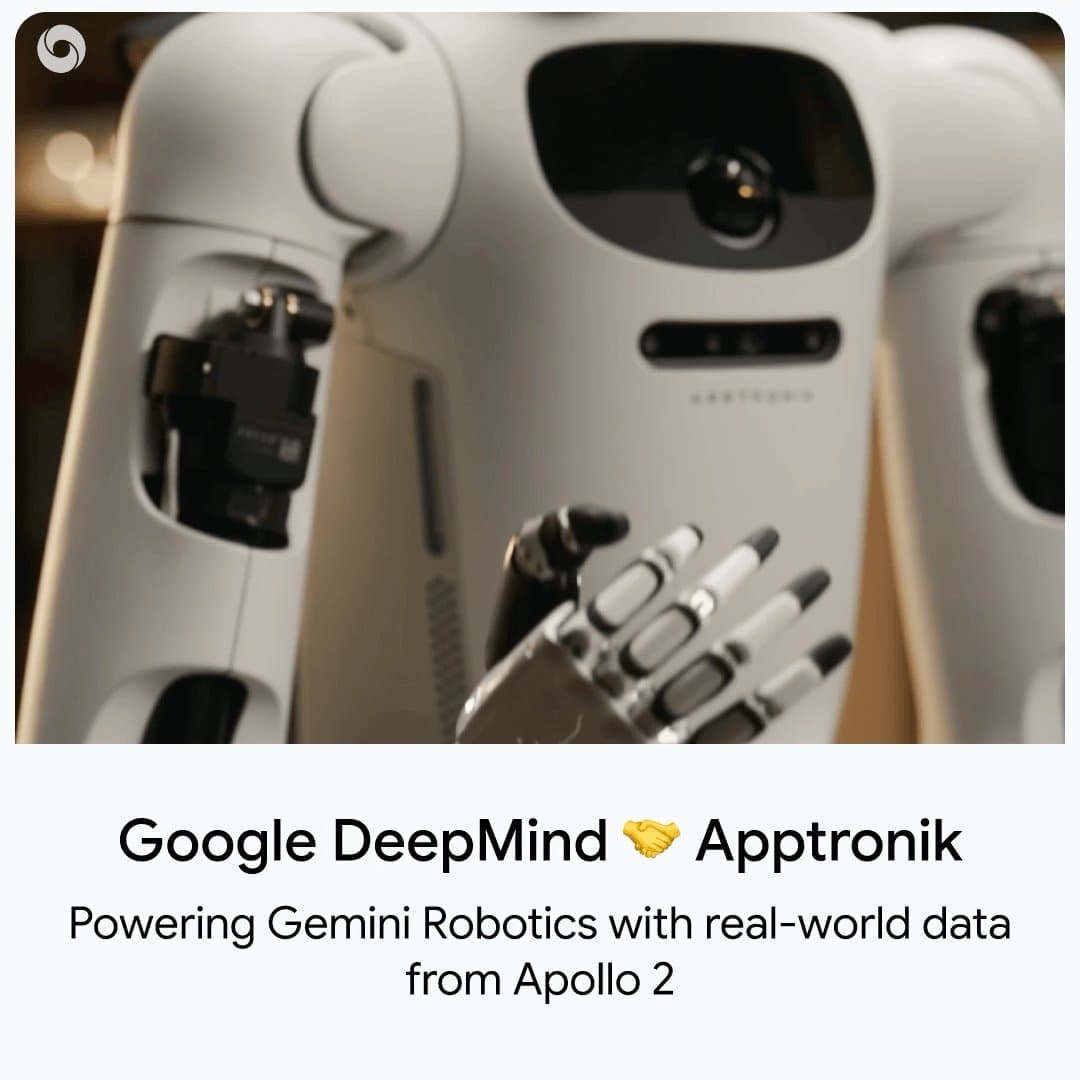
For all the breathless speculation about humanoid robots taking over warehouses by 2027, the reality on the ground is far less dramatic—and far more telling. The conventional wisdom holds that physical AI is just a data-scaling problem away from arriving at scale, but internal documents from Google DeepMind and its research partners paint a different picture: the bottleneck isn't compute or even hardware; it’s the mundane, expensive work of collecting real-world robotic interaction data. This week, Google DeepMind (@GoogleDeepMind) confirmed via its official feed that it is expanding its “Robot Park” facility, a controlled environment where its research partnership generates the kind of messy, unpredictable sensorimotor data that simulators simply cannot produce.
Engineers close to the project say the expansion—slated to double the facility's floor space by early 2027—is a direct response to a persistent failure rate in simulated-to-real transfer. While DeepMind has published promising results on large language models and vision models controlling arms and grippers, the rollout of those systems into actual logistics tasks has been anything but smooth. The robot park expansion will house additional manipulators, mobile platforms, and environment configurations designed to stress-test perception and control loops against real-world noise: dropped objects, variable lighting, and unseen obstacles. The facility is located at a undisclosed DeepMind research site, not a public warehouse, and is not yet generating production-level throughput.
This matters because the holy grail for players like Amazon Robotics, Tesla, and emerging startups is a general-purpose robot that can learn across tasks without exhaustive retraining. But the data flowing out of Robot Park is pointing toward a more cautious timeline. Researchers have found that models trained exclusively on synthetic data degrade sharply when encountering novel physical friction, gravity effects, or slight mechanical wear. The expansion suggests DeepMind is betting that brute-force data collection from real hardware—not just simulation refinement—remains the critical path.
What happens next is uncertain. The partnership, which involves undisclosed academic and commercial collaborators, has not committed to a public demo timeline. DeepMind has learned from past hype cycles not to overpromise. For now, the takeaway is sobering: the most advanced AI lab in the world is still building bigger sandboxes to teach robots how to pick up a box. The next milestone to watch is whether the Robot Park data leads to a published paper demonstrating zero-shot transfer to an unseen environment—or simply confirms that physical reality has not yet been outrun by models.
Source: https://x.com/GoogleDeepMind/status/2074157282477154597