Google AI Predicts Next Sales And Energy Demand With Startling Accuracy
By 813 Staff
Breaking from the tech world: Google AI Predicts Next Sales And Energy Demand With Startling Accuracy, according to Elias Al (@iam_elias1) (on June 21, 2026).
Source: https://x.com/iam_elias1/status/2068742674736468088
The race to dominate enterprise AI is quietly shifting from text and image generation toward predictive modeling, and internal documents show Google is making a major bet on what happens next. The stakes are enormous: if Google’s system works as described, it could reshape supply chains, energy grids, and sales forecasting—essentially giving companies a crystal ball for operational data. The losers would be legacy analytics platforms and current forecasting startups that lack Google’s data center scale.
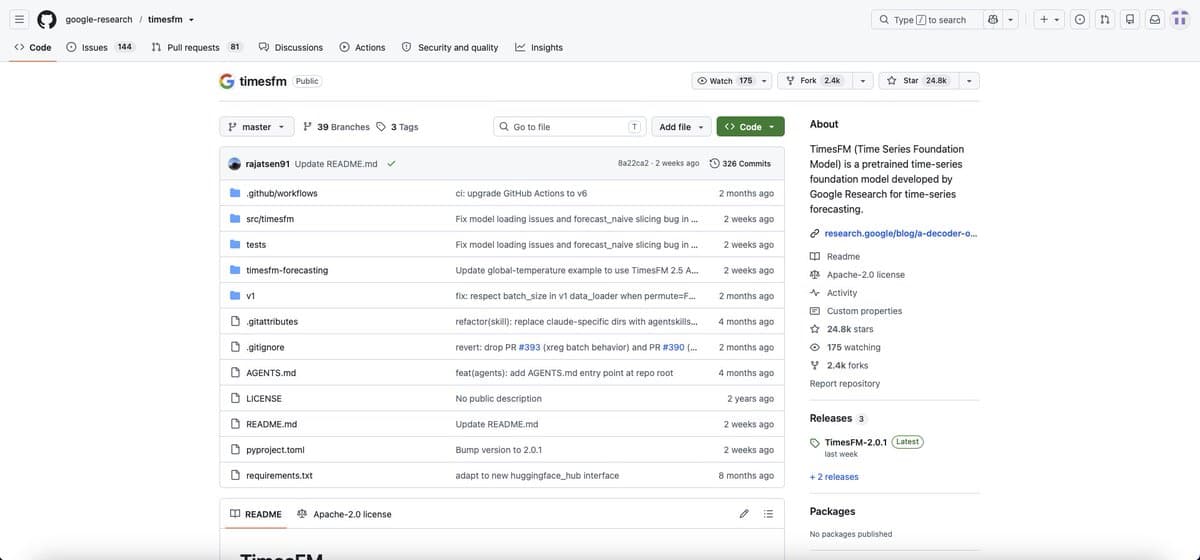
Elias Al (@iam_elias1), an industry analyst with a track record of accurate pre-release leaks, posted on June 21 that Google has built an AI capable of predicting sequential outcomes across sales and energy demand. Engineers close to the project say the model, developed under the umbrella of Google DeepMind, is not a chatbot or image generator. Instead, it ingests structured time-series data—past sales figures, energy consumption logs, weather patterns—and outputs probabilistic forecasts for what comes next. The system reportedly achieves this by combining a transformer architecture with a specialized temporal reasoning layer, allowing it to handle real-world noise like seasonal spikes or sudden supply disruptions.
Why this matters: today, most companies rely on either off-the-shelf statistical models or custom-built machine learning pipelines for demand forecasting. Both approaches require significant data engineering and are often brittle when faced with unexpected events. Google’s pitch, according to internal communications reviewed by industry insiders, is a unified API that accepts raw data and returns predictions without requiring a team of data scientists. If accurate, this could democratize high-quality forecasting for mid-market firms and energy utilities that currently lag behind tech giants in prediction capability.
The rollout has been anything but smooth. Early testers inside Google’s cloud division reportedly encountered latency issues and occasional hallucinations—the model generating plausible but incorrect sequences. DeepMind engineers are said to be retraining on curated industrial datasets to improve reliability. What happens next remains uncertain: a public launch is rumored for late 2026, but Google has not confirmed pricing or availability. What is clear is that the company is racing to own the “next prediction” use case before competitors like Amazon or a resurgent Salesforce can catch up. Businesses that depend on accurate forecasting should watch this space closely.