Google Expands Secret AI Watermark To Thousands Of Partners Worldwide
By 813 Staff
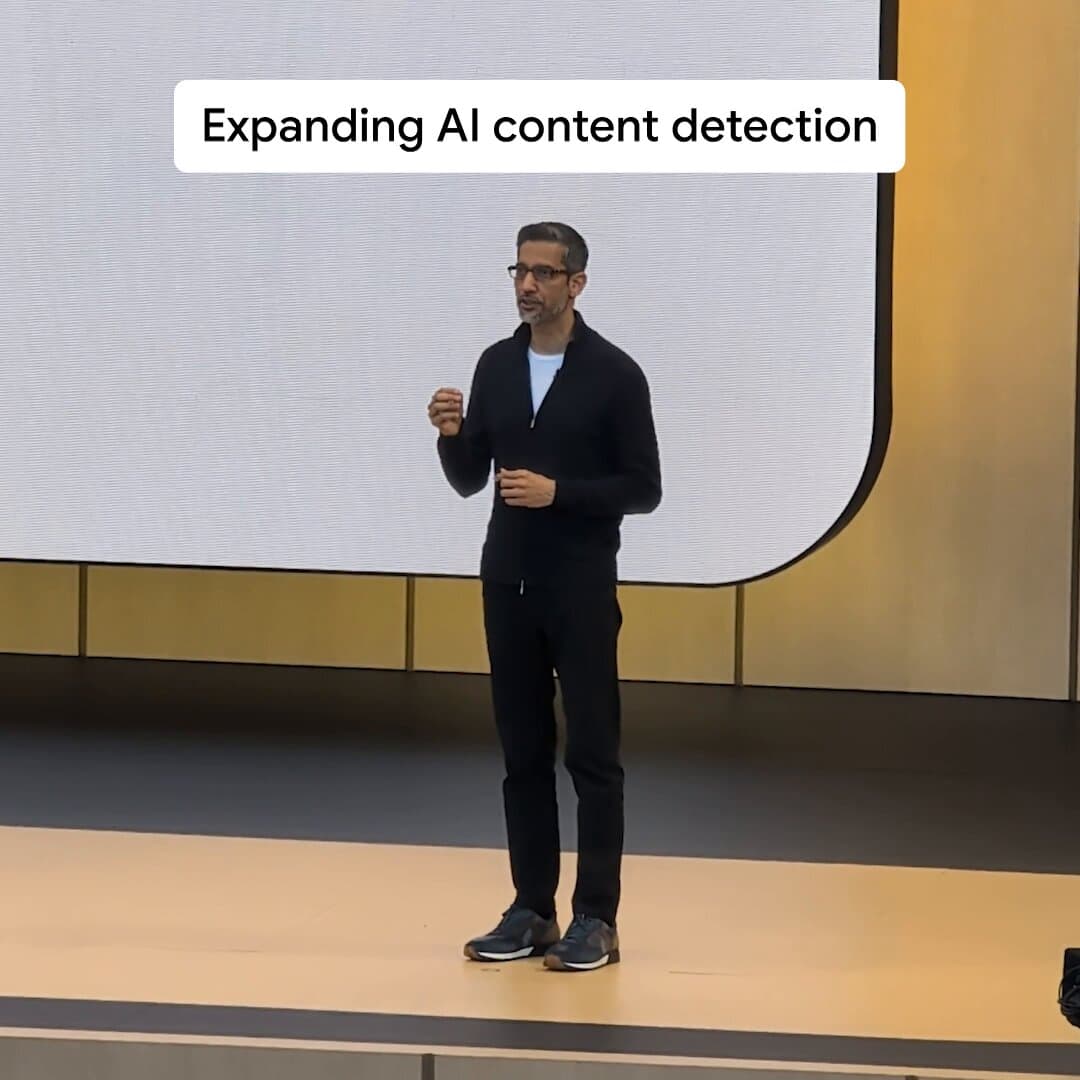
The latest development in AI and tech shows Google Expands Secret AI Watermark To Thousands Of Partners Worldwide, according to Google DeepMind (@GoogleDeepMind) (on May 22, 2026).
Source: https://x.com/GoogleDeepMind/status/2057898089621459434
Mountain View, Tuesday morning—a handful of DeepMind engineers are already inside Building 45, coffee in hand, debugging the latest integration pipeline for SynthID. The system, Google DeepMind’s imperceptible watermark for AI-generated content, is quietly rolling out to a larger set of partners, according to a post from the @GoogleDeepMind account on May 22. Internal documents show the expansion targets third-party platforms that generate text, images, and audio at scale, though the company has not named the specific partners yet. Engineers close to the project say the goal is to embed a cryptographic signature that survives cropping, compression, and even screenshotting—without degrading output quality.
The rollout has been anything but smooth. Early tests with a major image-generation API revealed that the watermarking slightly altered pixel distributions in high-dynamic-range renders, causing color-shift complaints from beta users. The team has since patched the algorithm to dynamically adjust embedding strength based on output format, but sources caution that full parity across modalities remains weeks away. SynthID currently works with Google’s own Gemini models and a handful of internal tools, but this public expansion signals a push to make the standard ubiquitous before the next wave of AI-generated media hits social feeds and newsrooms.
Why this matters: without a reliable, machine-verifiable watermark, the line between authentic and synthetic content is already eroding. Governments in the EU and California are drafting provenance mandates that will require platforms to tag AI outputs by mid-2027. SynthID’s invisibility is its key advantage—unlike overt labels, it cannot be stripped by a simple crop or repost. If DeepMind nails the integration, it could become the de facto watermarking layer for the entire ecosystem. If it fumbles, regulators may impose clunkier solutions that slow down legitimate use cases.
What happens next: the partner list is expected to be disclosed at Google I/O next month, though internal planning documents suggest at least two social media giants and one stock photography marketplace are already in private preview. The engineering team is also racing to port SynthID to video frames, a far more complex challenge due to temporal consistency requirements. No public timeline exists for that expansion, but the tweet’s phrasing—“expanding to more partners”—implies immediate onboarding, not a 2027 roadmap. For now, the watermark is live, the partner onboarding queue is growing, and every pixel that carries a SynthID signature is one more data point in the fight against synthetic misinformation.
Source: https://x.com/GoogleDeepMind/status/2057898089621459434