Kanye West's Latest Concert Features A Stunning Visual Spectacle
By 813 Staff
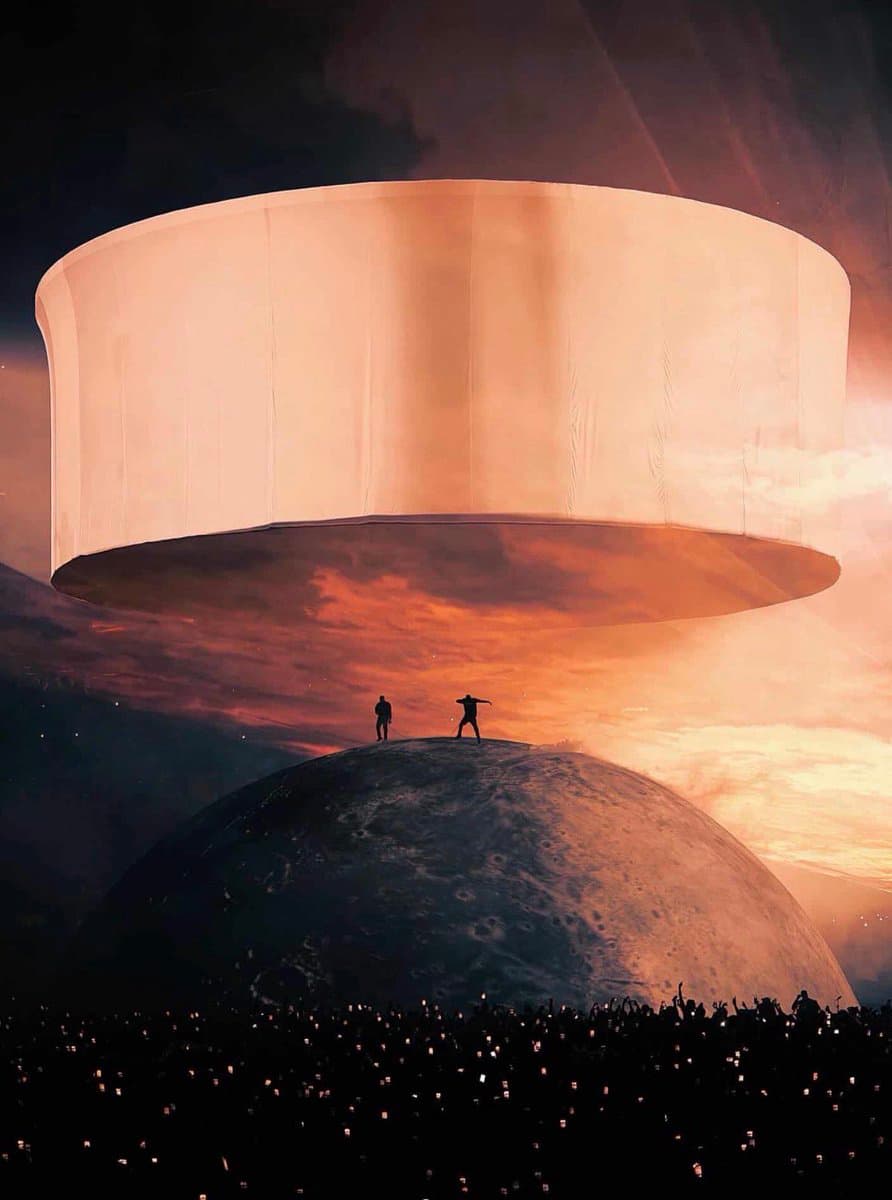
The decision to project a massive, unadorned photograph of a rural American barn onto the screens for the entirety of his performance has left attendees and critics starkly divided. At his Los Angeles concert on April 3, Ye, the artist formerly known as Kanye West, eschewed the pyrotechnics and elaborate choreography expected of a stadium show for a single, static visual that played for over ninety minutes. The image, captured and shared widely by concertgoer FearBuck (@FearedBuck), shows the stark, almost haunting simplicity of the scene against the roar of the crowd. Industry insiders say the move is either a profound piece of minimalist art or a baffling abdication of spectacle, with little room for middle ground.
Behind the scenes, the choice is being parsed not just for its artistic merit but for its commercial and contractual implications. Major tours of this scale are intricate financial ecosystems, with riders specifying production values that often guarantee a certain visual experience for the premium ticket price. While Ye’s star power affords him unusual creative leeway, whispers suggest promoters and venue partners were caught off-guard by the last-minute staging shift. The numbers tell a different story, however; the tour is sold out, indicating that his core audience is buying the artist, not necessarily the showmanship. This creates a fascinating tension between brand expectations and artistic freedom, a tension that streaming platforms and labels are watching closely as they negotiate with top-tier talent seeking greater control.
For the industry, the event underscores a broader shift where the artist’s narrative and intentional provocation can become the product itself. The barn image, now dissected across social media, has generated more column inches and analytical threads than a conventional show might have, proving that controversy, or at least stark ambiguity, retains significant cultural currency. It reframes the value proposition of a live event in an age of digital saturation, asking whether the memory of a shared, puzzling experience holds more weight than a forgettable, formulaic spectacle.
What happens next hinges on whether this was a one-night statement or the new template for the remainder of the tour. Production crews are reportedly on standby with both the elaborate original show design and the possibility of continuing the minimalist approach. The coming dates will reveal if this was a calibrated reset of audience expectations or an isolated experiment. For now, the barn stands as a Rorschach test in the middle of a stadium, its meaning—and its impact on the business of live performance—entirely in the eye of the beholder.