Malware Now Hides Inside Massive AI Code Leak
By 813 Staff
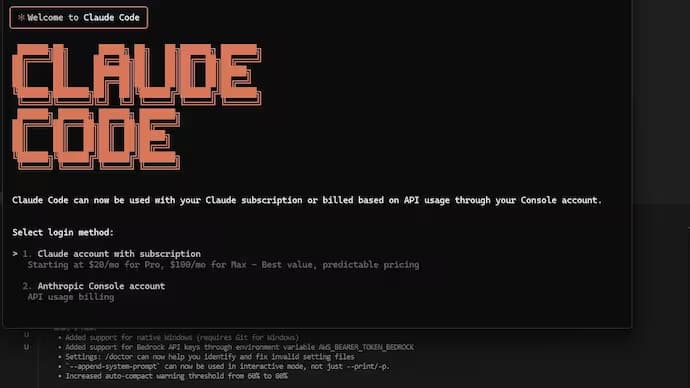
Breaking from the tech world: Malware Now Hides Inside Massive AI Code Leak, according to The Hacker News (@TheHackersNews) (on April 13, 2026).
Source: https://x.com/TheHackersNews/status/2043646904970719500
The timing of this latest security crisis is particularly acute, arriving just as enterprise development teams were beginning to standardize on advanced AI coding assistants for major Q2 projects. This week, a sprawling leak of proprietary source code from Anthropic’s Claude Code model has transformed from a mere intellectual property headache into an active and widespread malware distribution channel, according to a report from The Hacker News (@TheHackersNews). The initial cache, comprising over 512,000 lines of source material, was reportedly exfiltrated months ago but has now been weaponized. Security researchers tracking dark web forums and code repositories note that malicious actors have spent the intervening weeks meticulously embedding obfuscated payloads and backdoors within the leaked codebase. The contaminated files are now being presented on various platforms as “enhanced” or “unlocked” versions of the AI model, specifically targeting developers eager for a free or more powerful alternative to official offerings.
Internal documents from several affected software firms show that the first incidents were detected not by perimeter security, but by anomalous behavior in continuous integration pipelines. Engineers close to the project at one major cloud provider say the malware’s primary function appears to be credential harvesting and establishing persistent access to corporate development environments, with the secondary goal of poisoning software builds at the source. The rollout of these tainted code packages has been anything but smooth for the attackers, however, leading to fragmented and identifiable variants that have aided forensic teams. The scale of the leak means that even small snippets of the genuine Claude Code, repurposed in online tutorials or sample projects, could potentially be suspect.
For engineering leaders, the immediate impact is a severe erosion of trust in any third-party AI code not sourced directly from verified vendor channels. It forces a reevaluation of internal policies regarding the use of open-source AI models and underscores the unique risks when a training dataset or model weights become a Trojan horse. The consequence extends beyond immediate infection; any software company found to have inadvertently used this poisoned code in its shipping products could face monumental liability and reputational damage.
What happens next involves a complex cleanup. Anthropic, alongside major security vendors, is likely to issue detailed fingerprints and hashes of the leaked files to aid in detection, but the code is already proliferating across peer-to-peer networks and private servers. The most significant uncertainty is the full extent of the compromise. Without a centralized distribution point, tracing every infected machine or project will be nearly impossible. The industry is now bracing for a slow-burn incident where new infections may surface for months, each requiring costly remediation, as the blurred lines between cutting-edge tool and threat vector become starkly clear.
Source: https://x.com/TheHackersNews/status/2043646904970719500