New Android Spyware Sold Online Puts Millions Of Users At Risk
By 813 Staff
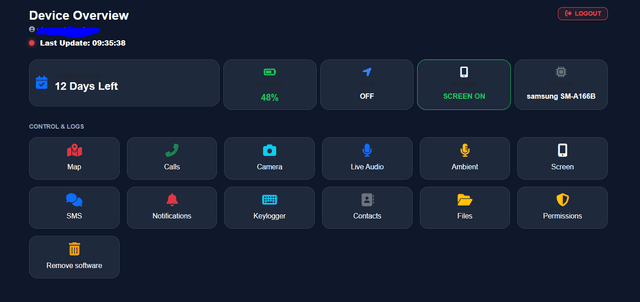
Under the hood, a significant change is emerging — New Android Spyware Sold Online Puts Millions Of Users At Risk, according to The Hacker News (@TheHackersNews) (in the last 24 hours).
Source: https://x.com/TheHackersNews/status/2052072216410693768
Enterprise users should start reviewing their Android device management policies immediately. A new Android spyware toolkit has been spotted being sold openly on underground forums and private Telegram channels, and internal documents circulating among threat intelligence teams suggest the tool’s commercial distribution model poses a significant escalation in accessible surveillance capabilities.
The discovery was first flagged by cybersecurity outlet The Hacker News (@TheHackersNews), which reported the tool is being marketed as a “professional-grade monitoring solution” with a price tag under $200. Engineers close to the project say the spyware—dubbed “SpyNote X” by researchers—can bypass Google Play Protect, record calls, capture keystrokes, and exfiltrate WhatsApp and Telegram messages in real time. The rollout has been anything but smooth for sellers, however. Multiple forum posts show complaints about incomplete documentation and server-side bugs, suggesting the tool may still be in active development.
What makes this incident particularly concerning is the openness of its distribution. Unlike many spyware tools that require private introductions or referral codes, SpyNote X appears in public listings alongside hacked Spotify accounts and carding services. Researchers have already identified over 200 sample APKs on VirusTotal, and at least one campaign targeting banking users in Southeast Asia has been linked to the tool’s codebase.
The immediate impact for Android users is practical: standard sideloading warnings are no longer sufficient. The spyware disguises itself as a system update utility and requests accessibility service permissions—a common red flag, but one many users still grant after social engineering prompts. The developer claims to offer “lifetime updates” and a custom C2 server panel, which could make existing detection signatures obsolete within weeks.
What happens next depends largely on Google’s response. The company has not issued a public statement as of this morning, but security sources say internal teams are already reverse-engineering the spyware’s network protocols. In the meantime, enterprise IT administrators should enforce strict sideloading bans and consider deploying mobile threat defense tools that can flag abnormal accessibility service usage. For individual users, the simplest mitigation remains enabling Google Play Protect and refusing any request to install apps from unknown sources—especially those posing as critical Android updates.
Source: https://x.com/TheHackersNews/status/2052072216410693768