Nvidia CEO Reveals The Shocking Future Of Artificial Intelligence
By 813 Staff
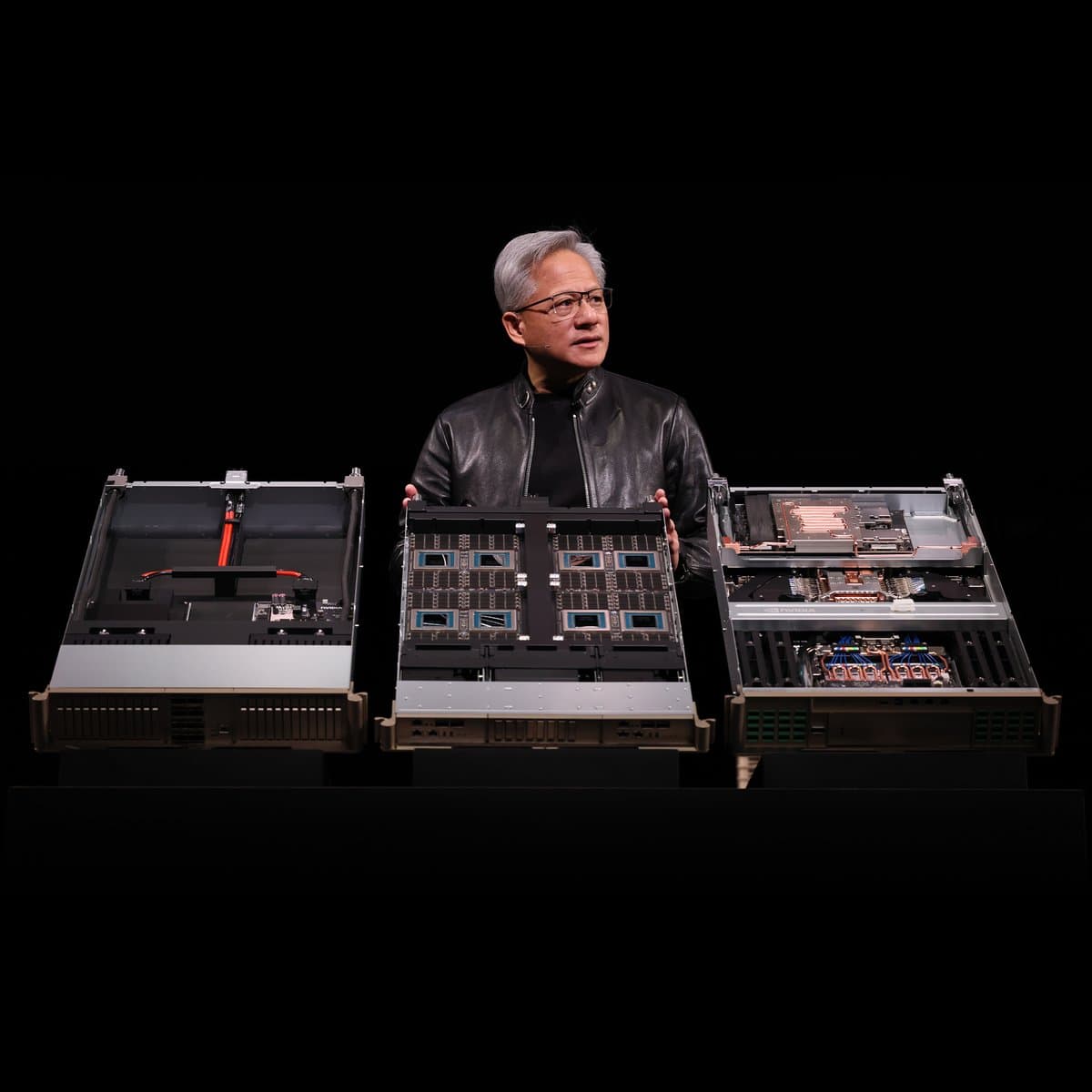
The immediate consequence of NVIDIA's latest platform reveal is a brutal, two-year roadmap compression for every other player in the data center. Companies that had planned incremental chip updates for late 2027 are now scrambling to re-architect entire product lines, with internal memos at several major semiconductor firms obtained by 813 Morning Brief showing emergency re-prioritization of projects deemed "NVIDIA-competitive." The catalyst was CEO Jensen Huang's keynote at the company's GTC conference this week, where he didn't just announce a new chip but outlined a fundamental shift in how enterprise AI will be built and sold.
During the presentation, Huang positioned the rise of what NVIDIA is calling "AI factories"—integrated systems that combine its new Blackwell architecture GPUs with a proprietary, full-stack software layer that manages everything from model training to inference deployment. Engineers close to the project say the software stack, which includes aggressive automated optimization tools, is the real story. It aims to lock in performance advantages that raw hardware specifications alone cannot guarantee, effectively making the platform a walled ecosystem. The rollout, however, has been anything but smooth. Early access partners report significant challenges in porting existing workloads to the new software environment, with one describing the process as "a ground-up rewrite for marginal efficiency gains."
This matters because it changes the economic calculus for every cloud provider and large-scale AI developer. The cost of switching to a competitor's hardware now includes the prohibitive expense of abandoning NVIDIA's deeply integrated software suite, which promises significant reductions in operational complexity. As @nvidia stated in its social media coverage of the event, AI did take center stage, but the subtext was clear: the company is moving from selling components to selling the entire assembly line. For startups building foundational models, this creates a paradox of dependency—gaining access to peak performance while ceding control over their own infrastructure stack.
What happens next is a period of forced alignment. Major cloud vendors like AWS, Google Cloud, and Microsoft Azure, which have been developing their own custom AI accelerators, must now decide how deeply to integrate NVIDIA's new full-stack approach versus pushing their own, potentially less performant but more controllable, alternatives. The timeline for widespread availability of the Blackwell systems is slated for later this year, but the true adoption curve will be determined by how quickly NVIDIA can resolve the software onboarding pains its partners are experiencing. The uncertainty lies in whether the market will accept the trade-off of vendor lock-in for promised leaps in efficiency, or if a credible software challenge can emerge to keep the hardware landscape open.