Royce Reed Fires Back At Woman Who Defended Dwight Howard
By 813 Staff
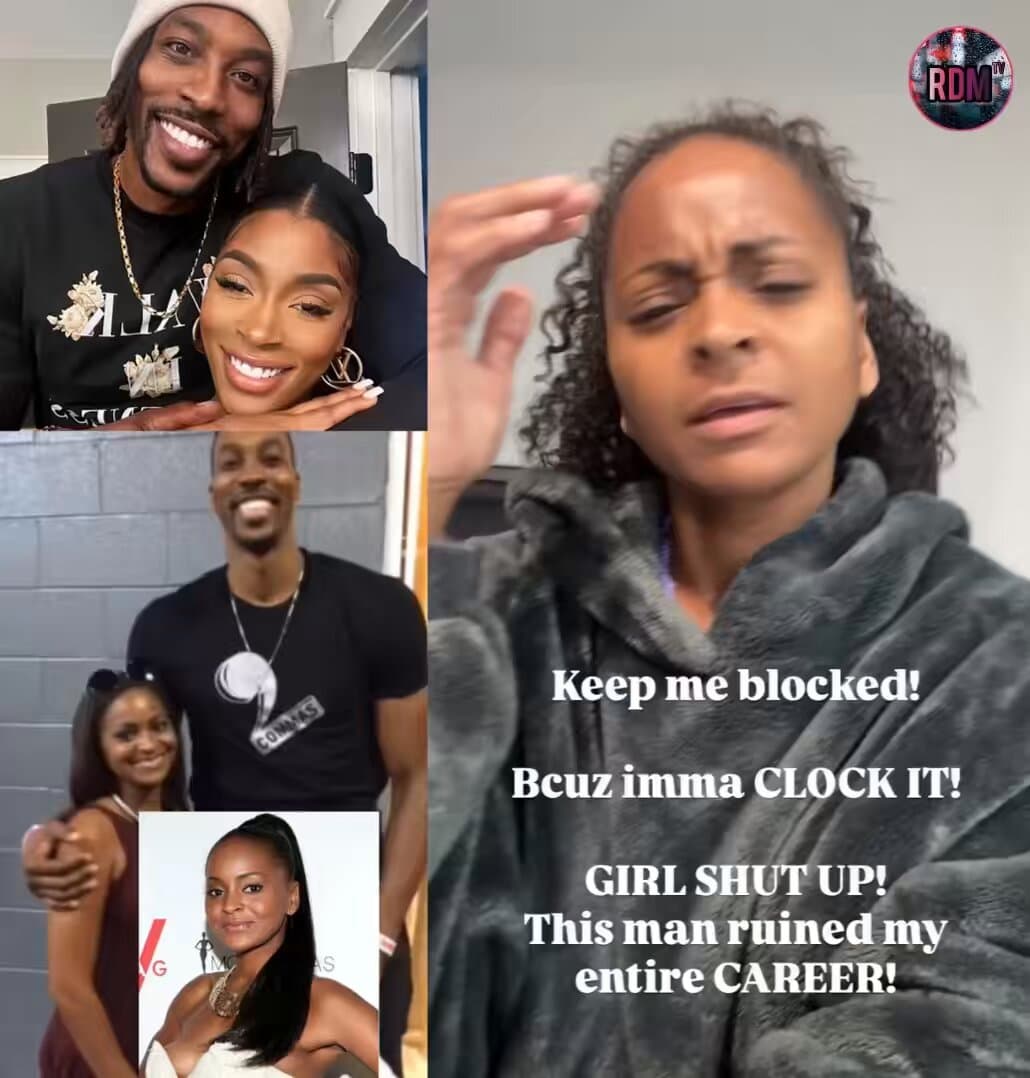
The decision by actress and content creator Royce Reed to directly address a recent claim made by fellow influencer Amy Luciani has ignited a fierce debate online, dividing fans and critics over the merits of engaging with viral personal narratives. The exchange, which centers on a claim Luciani made regarding former NBA star Dwight Howard, escalated when Reed posted a public response on March 8th, a clip of which was subsequently shared by the media account Rain Drops Media (@Raindropsmedia1). While the precise nature of Luciani’s initial claim remains unconfirmed by independent sources, Reed’s pointed rebuttal has shifted the conversation from private gossip to a public examination of accountability and narrative control in the digital age.
Industry insiders say these public, personality-driven disputes represent a significant evolution in celebrity and influencer culture, where direct-to-audience communication bypasses traditional media gatekeepers. For figures like Reed and Luciani, whose brands are built on accessible authenticity, navigating these conflicts is a high-stakes calculation. Engaging can amplify a story, but silence can be interpreted as confirmation. The numbers tell a different story behind the scenes, where such viral moments translate directly into metrics—follower spikes, engagement rates, and ultimately, valuation for brand deals and platform negotiations. This incident is less about the specific allegation and more about the economy of attention that now governs digital careers.
The relevance for audiences lies in the blurred line between curated content and personal boundary-setting. Viewers are increasingly cast as jurors in real-time, dissecting tone and wording for clues, making the court of public opinion an active participant. This dynamic forces creators to manage their communities while defending their personal lives, a tightrope walk that can define public perception for years. The consequence is a media landscape where personal histories are continuously negotiated in public, with lasting impact on all involved parties.
What happens next is a waiting game. The immediate fallout will be measured in online engagement and the potential for further statements from either party or from Howard himself. However, the longer-term trajectory involves brand partnerships and professional opportunities, which can be bolstered by a show of strength or damaged by prolonged controversy. What remains uncertain is whether this pattern of public call-and-response will become a standardized playbook for handling personal disputes. As it stands, this incident underscores a new reality where the creative decision to engage is also a critical business one, with the audience watching every move.
Source: https://x.com/Raindropsmedia1/status/2030490374972526839