Russian Cyber Army Launches Secret Attack On US Officials And Soldiers
By 813 Staff
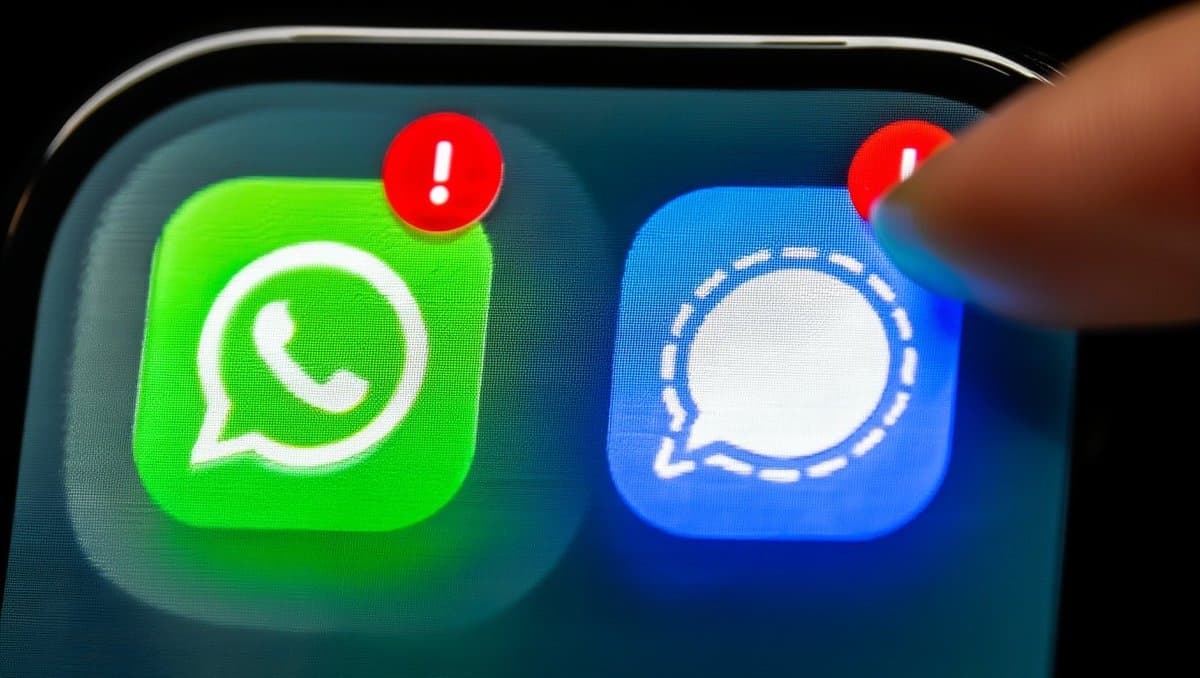
The frontier of AI-driven social engineering just advanced, and the first major offensive is now underway. Security researchers have identified a sophisticated, state-aligned campaign leveraging generative AI to craft hyper-personalized phishing lures, with Russian hacking groups targeting the private accounts of government officials, military personnel, and journalists across NATO-aligned countries. According to a report from The Hacker News (@TheHackersNews), the operation, active since at least early March, bypasses traditional corporate defenses by focusing on personal email and social media accounts, where security is often weaker and the content more trusted.
Internal documents from one targeted organization, reviewed by 813, show a concerning escalation in tactics. The attackers are using AI not for bulk spam, but to analyze an individual’s public digital footprint—speeches, articles, social posts—and generate compelling, context-aware messages. A journalist covering Eastern European affairs might receive a fabricated but credible-sounding tip; a military logistics officer could get a message mimicking a colleague referencing a recent, real exercise. Engineers close to the project at a leading security firm confirmed the phishing infrastructure is highly ephemeral, with domains and hosting rotating rapidly to evade blacklists.
The strategic shift here is critical. By moving off hardened government networks and onto personal accounts, the threat actors are exploiting the weakest link in the security chain: human judgment in informal settings. The objective appears to be twofold: initial access to sensitive personal communications and, more importantly, a foothold to pivot toward professional networks. A compromised personal email is often the key to resetting passwords for work-related services, creating a dangerous bridge into more secure systems.
The rollout of defensive measures has been anything but smooth. While major platforms have increased alert volumes for the affected demographics, the personalized nature of the attacks makes automated detection exceptionally difficult. The campaign underscores a new reality where AI lowers the cost and increases the scale of precision social engineering, a tool now firmly in the arsenal of advanced persistent threat groups.
What happens next involves a messy game of catch-up. Security teams are pushing for widespread adoption of hardware security keys for personal account protection, a significant behavioral hurdle. Meanwhile, the uncertainty lies in the campaign’s success rate, which remains closely guarded by intelligence agencies. The quiet consensus among analysts is that this is a proof-of-concept that will be widely replicated, turning a cutting-edge threat into a commonplace one within the year.
Source: https://x.com/TheHackersNews/status/2032423908134223925