Scientists Stunned As AI Makes Unprecedented Discovery On Its Own
By 813 Staff
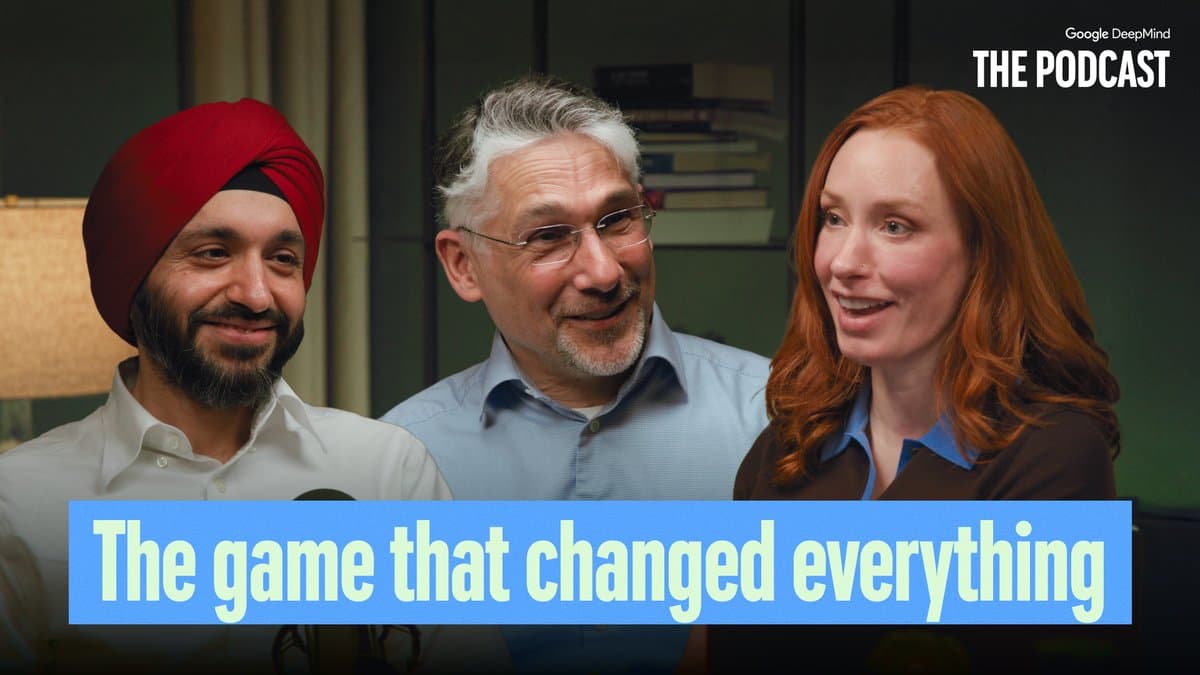
In the last 24 hours, a cryptic yet strategically timed post from Google DeepMind’s official account has sent a clear signal to the AI research community: the race to build AI for fundamental scientific discovery is entering a new, more public phase. The tweet, which asked “What does it take to build AI for scientific discovery?” and trailed off, is widely interpreted by insiders as the preamble to a major announcement, likely a new research framework or a significant paper drop slated for this week. The move follows intense, quiet competition with entities like OpenAI’s Superalignment team and Anthropic, all vying to claim the mantle of creating the first AI systems capable of generating novel, testable scientific hypotheses.
Internal documents and discussions with engineers close to the project suggest that @GoogleDeepMind has been consolidating its various scientific AI efforts—spanning protein folding (AlphaFold), material discovery, and mathematical reasoning—under a more unified banner. The goal is a generalized “scientist agent” that can navigate the entire iterative process of the scientific method, from formulating a question to designing experiments and interpreting results in complex domains like quantum chemistry or genomics. However, the technical and philosophical rollout has been anything but smooth. Sources indicate persistent internal debates about how to properly ground such systems in physical reality and avoid the “hallucination” problem that plagues large language models when applied to precise empirical fields.
This matters because the promise extends beyond academic accolades. The first organization to reliably deploy AI for discovery stands to unlock unprecedented value in pharmaceuticals, next-generation battery technology, and carbon capture solutions. It represents a shift from AI as a tool for pattern recognition to AI as an active collaborator in pushing the boundaries of human knowledge. For the tech industry, it also raises immediate questions about intellectual property, the validation of AI-generated discoveries, and the potential concentration of scientific capital within a few well-funded corporate labs.
What happens next is a formal unveiling, expected within days. The industry will be scrutinizing the technical report for details on the system’s architecture, its constraints, and crucially, any real-world validation beyond curated benchmarks. The key uncertainty is whether this is a genuine leap toward autonomous discovery or a sophisticated rebranding of existing, narrow tools. The response from academic and independent research institutions, who have expressed concerns about access and transparency, will also be a critical indicator of whether this technology can fulfill its world-changing potential or remain siloed behind corporate walls.
Source: https://x.com/GoogleDeepMind/status/2032147864042803617