This AI's Secret Feature Is Changing How Millions Work
By 813 Staff
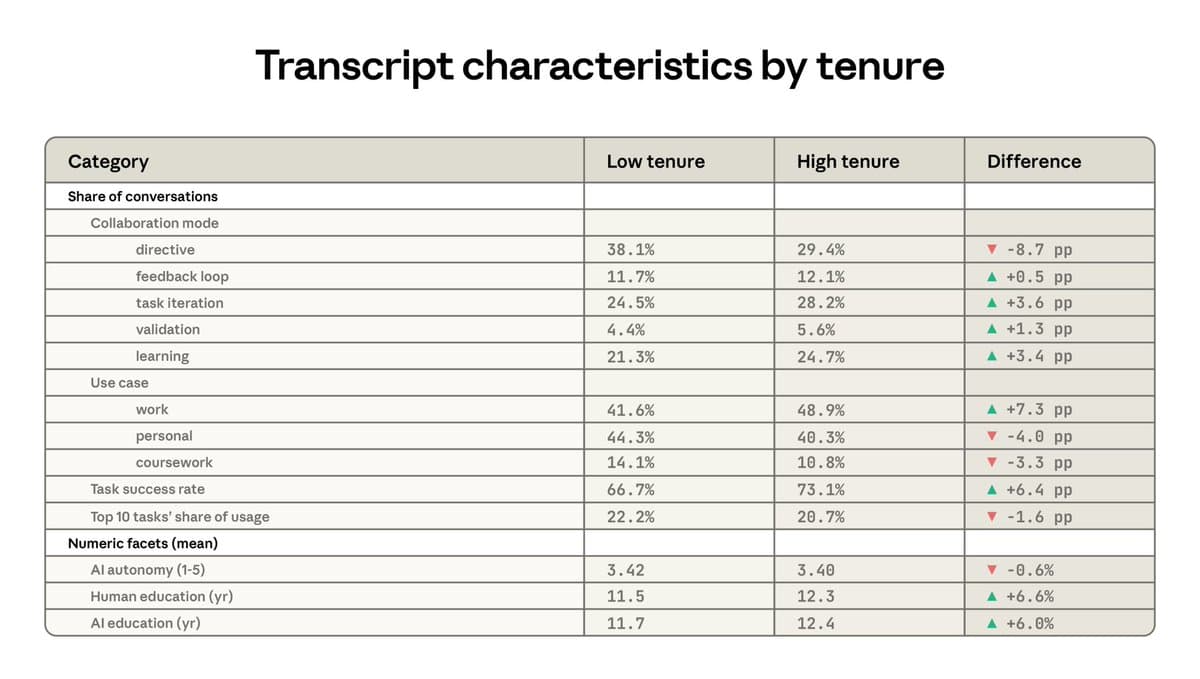
For millions of professionals and students, the AI assistant they rely on daily is no longer just a tool for brainstorming and editing. It has become a primary engine for executing complex, multi-step tasks, fundamentally shifting how work gets delegated to machines. This is the core finding from the latest Anthropic Economic Index, a data series from the AI lab @AnthropicAI that tracks granular usage patterns of its Claude models. Internal documents show the company’s analysts have been tracking a decisive pivot over the last quarter, moving from simple Q&A to sophisticated, orchestrated workflows.
The data, released by Anthropic (@AnthropicAI) on March 24, 2026, reveals a steep decline in what the company terms “single-turn” interactions—basic prompts like “summarize this article.” The growth is now concentrated in “multi-turn, context-heavy” sessions where users provide lengthy background documents, intricate instructions, and iterative feedback to produce finished outputs. Engineers close to the project say this aligns with internal telemetry showing surging demand for the 200K context window, with users regularly stuffing it with technical manuals, lengthy codebases, or entire strategic plans as foundational knowledge. The assistant is increasingly being used not as a search replacement, but as a synthetic team member that applies a provided knowledge base to a new problem.
This shift matters because it signals a maturation of the technology from a novelty to a core operational layer. The economic impact is tangible: teams are using Claude to automate the analysis of legal contracts, generate complete software modules from specifications, and manage complex data transformation pipelines. The risk, however, is the creation of a new form of technical debt, where critical business logic is embedded in opaque, natural-language prompts understood only by a few employees. The rollout of this capability into mainstream workflows has been anything but smooth, with early adopters reporting significant time invested in “prompt engineering” their internal processes to achieve reliable outputs.
What happens next is a race for stability and scale. Anthropic and its rivals are now forced to prioritize robustness and consistency in these long, complex interactions over simply improving raw creative capabilities. The next benchmark for the industry will be an assistant’s ability to reliably execute a 50-step project brief over several hours without veering off course or forgetting critical early instructions. The uncertainty lies in whether the current architecture of large language models can support this level of deterministic reliability, or if a new approach is required. For now, the genie is out of the bottle; the workday for millions has been permanently altered, delegating not just tasks, but entire job functions.
Source: https://x.com/AnthropicAI/status/2036499691571953848