Windows Users Warned Of Critical New Remote Hijacking Threat
By 813 Staff
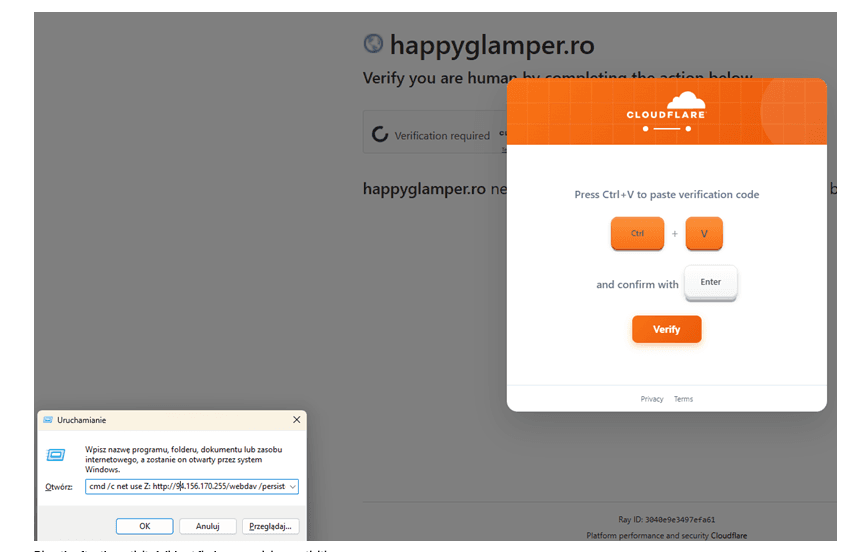
Silicon Valley insiders report Windows Users Warned Of Critical New Remote Hijacking Threat, according to The Hacker News (@TheHackersNews) (in the last 24 hours).
Source: https://x.com/TheHackersNews/status/2033482027853578323
The familiar Windows Run dialog, that simple box summoned by pressing Win+R, has become the latest vector for a sophisticated malware campaign. Security researchers tracking the new “ClickFix” variant have confirmed it is exploiting this trusted system utility to mount a remote WebDAV share, a technique that allows it to bypass traditional security checks and execute malicious payloads directly from an attacker-controlled server. According to a report by The Hacker News (@TheHackersNews), this method represents a significant evolution in social engineering attacks, turning a fundamental Windows feature into a potent threat.
The attack begins, as so many do, with a phishing email. A user is tricked into opening a malicious shortcut file, often disguised as a PDF or document. This file contains a command that uses the `shell:AppsFolder` protocol and the Windows Run dialog’s functionality to connect to a remote WebDAV server. Once this connection is established, the remote server is mounted as a network drive. From there, the attacker can execute a script or binary hosted on that server. The critical danger lies in the execution context; because the action is initiated through a trusted Windows process, many endpoint protection systems may treat it as legitimate user activity, allowing the payload to slip through defenses. Engineers close to the project say the malware’s operators are leveraging this ambiguity with high efficiency.
This matters because it fundamentally undermines a common user behavior. The Win+R dialog is a staple for IT professionals and power users, a symbol of legitimate system control. By co-opting it, ClickFix erodes that inherent trust and demonstrates a move towards “living-off-the-land” techniques that abuse built-in OS tools. The impact is broad, targeting both enterprises and individual users who might be less suspicious of an action that appears to originate from a core Windows interface. The rollout of this technique has been anything but smooth for defenders, forcing a rapid reassessment of detection rules focused on unusual network share activity and command-line arguments spawned by the `explorer.exe` process.
What happens next involves a race to update detection signatures and user training. Major antivirus and endpoint detection and response vendors are likely already pushing updates to flag the specific command sequences used in these shortcuts. However, the inherent flexibility of the WebDAV approach means attackers can quickly modify their infrastructure. The uncertainty lies in how quickly corporate security policies can adapt, potentially requiring the blocking of outbound WebDAV connections at the firewall level—a blunt instrument that could break legitimate business applications. For now, the clearest advice for users and administrators is heightened skepticism towards unexpected email attachments, even those that appear to be simple document shortcuts, as the gateway to this intrusion has become deceptively mundane.
Source: https://x.com/TheHackersNews/status/2033482027853578323