You Won't Believe Who Just Legally Owns This Viral Catchphrase
By 813 Staff
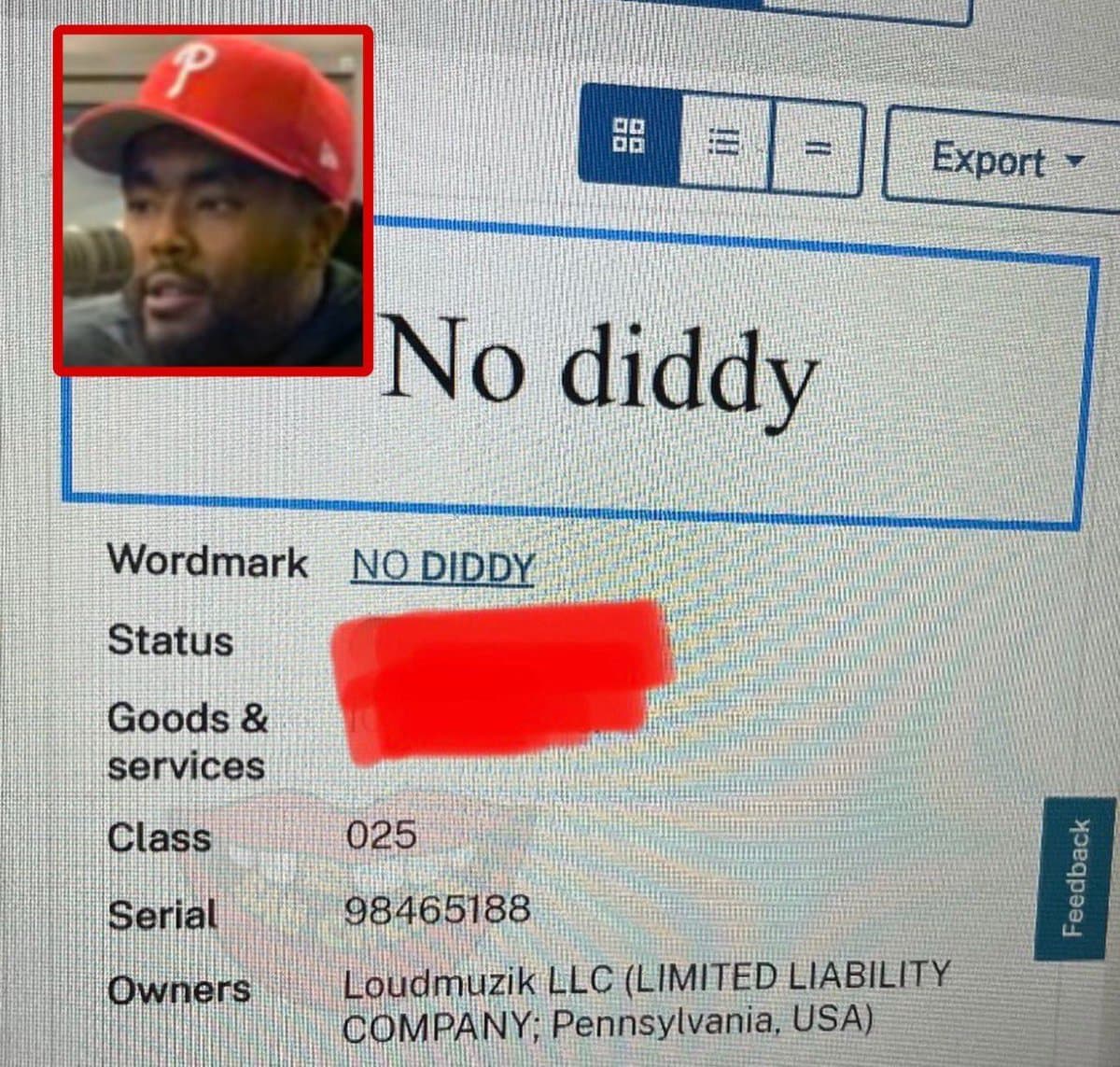
While the phrase “No Diddy” has ricocheted across social media and protest chants for months, few outside intellectual property circles are aware that the term is now a privately held commercial asset. According to a trademark filing first reported by the account Wild Media (@WildMediaOnly), Philadelphia rapper Quilly has secured federal trademark rights for the phrase “No Diddy” for use on clothing, specifically hats, shirts, and sweatshirts. The filing, registered on March 12, 2026, moves the slogan from the realm of public discourse into a branded merchandise play, a legal maneuver that is already generating complex conversations behind the scenes about the monetization of cultural moments.
The rapper, whose legal name is Christopher Quillin, has not publicly commented on the motivation behind the filing. Industry insiders say such a move is not uncommon for artists looking to capitalize on viral trends, but the context here is uniquely charged. The phrase emerged organically from widespread public sentiment and has been used in protests and online discussions following numerous allegations against music mogul Sean “Diddy” Combs. By securing the trademark, Quilly now controls the primary commercial use of the phrase on apparel, preventing others from legally selling “No Diddy” merchandise without his authorization. The numbers tell a different story from pure activism; this is a business decision with potential for significant revenue from a slogan already in high demand.
The impact of this trademark extends beyond a single rapper’s merchandise table. It sets a precedent for how rapidly evolving cultural catchphrases, particularly those born from serious social commentary, can be swiftly commodified. For consumers, it means that purchasing any official “No Diddy” apparel would directly benefit Quilly, not any broader cause or movement associated with the phrase’s origin. Legal experts note that the trademark does not restrict the phrase’s use in speech or journalism, but it squarely claims the commercial apparel space. This creates an immediate tension between the phrase’s grassroots, protest-oriented roots and its new status as a protected brand.
What happens next hinges on Quilly’s next moves. Observers are watching to see if he launches an official clothing line, as the filing permits, and how he addresses the obvious ethical questions about profiting from a slogan tied to allegations against another industry figure. Furthermore, it remains uncertain whether this action might invite legal challenges, though the trademark appears to have been properly granted. The situation underscores a recurring industry theme: the lightning speed at which digital culture can be packaged and sold. The journey of “No Diddy” from a rallying cry to a trademarked logo on a t-shirt is a stark case study in the modern entertainment economy, where viral sentiment and commerce are often inextricably linked.
Source: https://x.com/WildMediaOnly/status/2032035128008929511