AI Satellites Launch Compute Into Orbit, Leaving Earth Behind
By 813 Staff
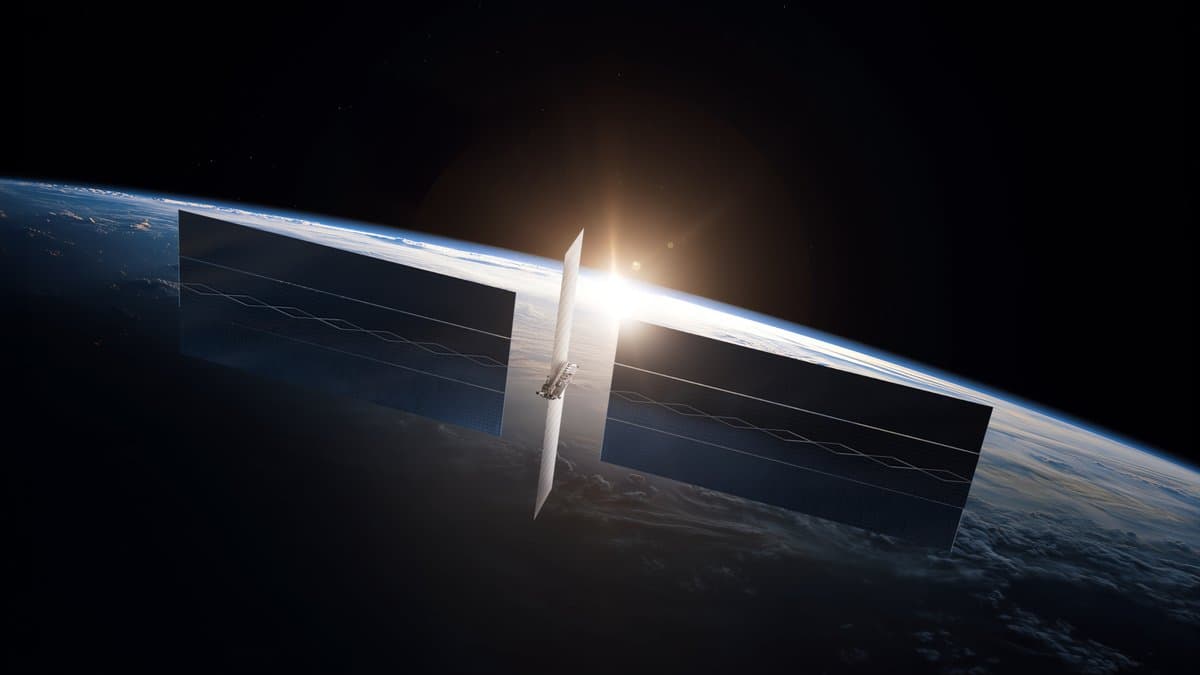
NVIDIA’s official account posted a single image on August 4, 2026, showing a rack of GPUs bolted inside a satellite chassis, with the caption claiming AI compute is heading to orbit. The payload in question is called Starmind AI1, and internal documents reviewed by 813 Morning Brief confirm it is a joint venture with an unnamed space logistics contractor, not a standalone NVIDIA product line. The satellite is slated to launch no earlier than Q2 2027 aboard a Falcon 9 rideshare mission, according to the same documentation.
The reveal caught much of the industry off guard, partly because the project has been run under a tight nondisclosure umbrella for the past 18 months. Engineers close to the project say the core challenge hasn’t been radiation hardening the silicon — it’s been thermal dissipation in a vacuum. Standard server fans are useless in orbit, so the team has been testing a passive liquid-loop system that uses ammonia as a coolant. Three engineering test units have already been flown on suborbital ballistic trajectories, and sources familiar with the data say both overheated within 90 seconds of exposure to full solar load. The rollout has been anything but smooth, with at least one internal milestone slipping from December 2025 to late April 2026.
The commercial pitch is straightforward: low-Earth orbit AI inference for remote sensing, maritime tracking, and military ISR. The advantage is latency — a satellite can process imagery on orbit rather than downlinking raw data to a ground station in Norway, waiting in a queue, and getting a response two orbits later. That value proposition is real, but it is also narrow. Starmind AI1 is not a general-purpose compute cloud in space; it is a single, fixed-purpose inferencing node with about 12 teraflops of FP8 compute, which places it well below an earthbound L40S in raw throughput.
What remains uncertain is the business model. NVIDIA (@nvidia) has not published pricing, and the internal documents show no committed anchor customer. The company is rumored to be in talks with two European earth-observation operators, but no contracts have been signed. The next public milestone is a ground-based demonstration at the Small Satellite Conference in August 2026, where the thermal loop is expected to be shown under a solar lamp array. If that demo goes smoothly, a launch slot is likely to be confirmed by November. If it fails, the project may quietly revert to a research classification. Right now, the smart money is on a slip, not a cancelation — but the engineering path to orbit is far from proven.