Google Launches Revolutionary Budget AI Model That Slashes Computing Costs Forever
By 813 Staff
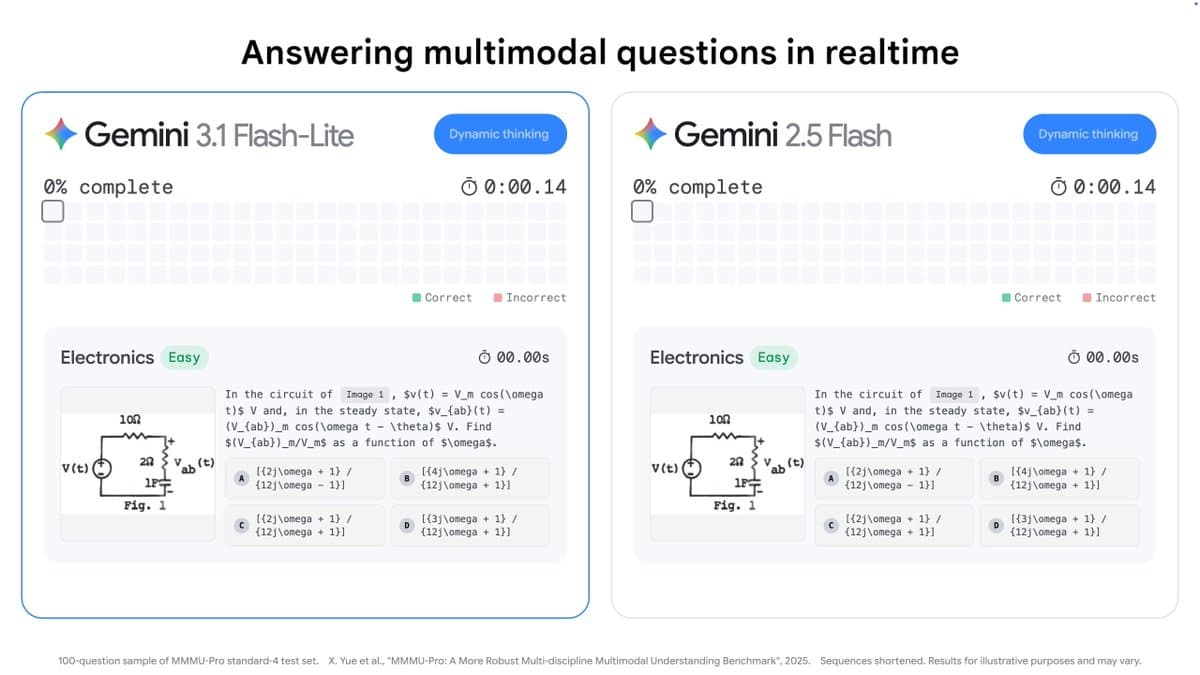
A major product shift is underway — Google Launches Revolutionary Budget AI Model That Slashes Computing Costs Forever, according to Google DeepMind (@GoogleDeepMind) (this afternoon).
Source: https://x.com/GoogleDeepMind/status/2028872381477929185
Google just fired a direct shot at OpenAI's pricing advantage with the launch of Gemini 3.1 Flash-Lite, positioning it as the search giant's most economical offering in the Gemini 3 series yet. The move, announced by @GoogleDeepMind on March 3, 2026, arrives as the competition for developer wallet share intensifies across the foundation model landscape.
Internal documents show that Flash-Lite has been in development since late 2025, emerging from DeepMind's effort to compress model capabilities without sacrificing too much performance. Engineers close to the project say the focus was ruthlessly practical: match or beat the cost-per-token metrics that have made competitors like Anthropic's Claude Haiku and OpenAI's GPT-4o Mini attractive to startups operating on thin margins.
The rollout has been anything but smooth in the broader Gemini 3 family. While Gemini 3.0 Pro launched to strong benchmarks last year, adoption among enterprise customers has lagged behind initial projections, according to people familiar with Google Cloud's quarterly reviews. Flash-Lite appears designed to address a different segment entirely: developers building high-volume applications where inference costs become the primary constraint. Think customer service bots processing millions of queries daily, content moderation pipelines, or automated data extraction workflows.
What remains unclear is exactly how Google achieved the cost reduction. The company hasn't disclosed whether Flash-Lite uses aggressive quantization techniques, a smaller context window, or architectural changes that trade some reasoning depth for speed. Developers who got early access through Google's Trusted Tester program have noted faster response times but haven't been able to run comprehensive evaluations yet.
The timing matters. OpenAI is widely expected to announce pricing changes for its o1 series models later this quarter, and Anthropic recently cut prices on Claude 3.5 Sonnet by nearly thirty percent. The model inference market is experiencing its first real price war, and Flash-Lite is Google's bet that cost-conscious developers will experiment with switching providers if the economic case is compelling enough.
What happens next depends largely on independent benchmarks that typically emerge within days of a new model release. Developers will want to see whether Flash-Lite maintains acceptable quality on common tasks, and whether its cost advantage holds up under real-world usage patterns rather than synthetic tests. Google has scheduled a technical deep dive for later this month, which should provide more architectural details and help clarify exactly where Flash-Lite fits in production stacks.
Source: https://x.com/GoogleDeepMind/status/2028872381477929185